The Quiet Revolution in Your Living Room
Picture this: a Friday evening, your favorite spot on the couch, the Android TV box humming quietly beneath your television. You launch YouTube, ready to catch up on your favorite channels—and then it begins. Thirty-second unskippable ads. Sponsored segments embedded within videos. By the time content actually plays, you've watched more advertisements than entertainment. Your evening, once promising, now feels like a battle for your own attention. But what if there were another way? Enter SmartTube, the open-source Android TV application that has quietly become the most talked-about alternative to Google's official YouTube client—and arguably one of the most controversial pieces of software in the streaming ecosystem today.
The Genesis of a Movement
Android TV was supposed to represent the democratization of smart television—an open alternative to proprietary walled gardens. The official YouTube app came pre-installed on nearly every device, offering seamless access to the world's largest video library. But as years passed, advertisements grew longer and more intrusive. The thirty-second unskippable commercial became standard rather than occasional. YouTube Premium positioned itself less as an enhancement and more as protection money against an increasingly hostile viewing experience.
The developer known online as "yuliskov" saw an opportunity where others saw only frustration. Rather than complain about ads or pay for Premium, they asked a more fundamental question: what if the YouTube client itself could be reimagined? The result was SmartTube, an application that has grown from a niche GitHub project into a phenomenon with a passionate community—and a target on its back.
The Architecture of Elegance
SmartTube's headline feature is also its most misunderstood. When users hear "ad blocking," they imagine an arms race—ads detected and blocked in real-time, requiring constant updates. But SmartTube takes a fundamentally different approach. The application doesn't block ads; it is architecturally incapable of displaying them. By building the client from the ground up without ad infrastructure, SmartTube doesn't win the blocking battle—it simply refuses to fight it. This philosophical distinction matters: there are no banner advertisements, no sponsored video inserts, no promoted content masquerading as recommendations.
Perhaps most innovative is SponsorBlock integration. This crowdsourced database identifies sponsored segments within videos—those "this video is sponsored by" sections that pepper the platform. These aren't technically advertisements in YouTube's system; they're part of the content itself. Users submit timestamps, which are aggregated, verified, and made available to everyone. When you watch through SmartTube, sponsored segments are automatically skipped—not because developers decided what you should see, but because thousands of viewers collectively decided what they'd rather skip.
"SponsorBlock is a crowdsourced browser extension to skip sponsor segments in YouTube videos." - The SponsorBlock Project
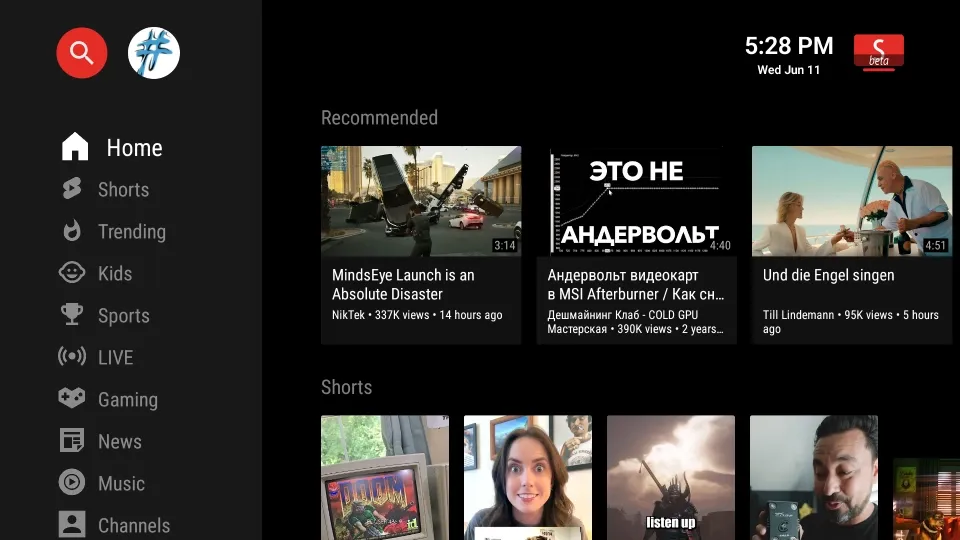
Technically, SmartTube matches the official client's capabilities: 8K resolution, 60 FPS, HDR support, adjustable playback speed, and live chat during streams. The difference is that all of this comes without the commercial baggage that has accumulated around the official platform. What remains is YouTube as it existed in an earlier era: content chosen by creators and curated by viewers.
Two Clients, Two Philosophies
Google's YouTube for Android TV offers the path of least resistance—pre-installed, officially supported, seamlessly integrated with Google's ecosystem. But that convenience demands tolerance for advertising or payment for Premium. Recent years have seen thirty-second unskippable ads become standard on connected TV platforms globally, transforming what was once a free platform into what feels like a paid service in disguise.
"YouTube is bringing longer 30-second unskippable ads to its TV app globally in its quest to better monetize the segment." - Android Headlines, March 2026
SmartTube presents a different proposition: free in cost, free in philosophy, community-enhanced. The trade-offs are practical rather than financial. Users must sideload the application rather than install through the Play Store; account integration works differently than expected. Neither client is objectively superior—they serve different priorities. The choice between them is ultimately between convenience and autonomy, between accepting the platform as given and reshaping it to personal preferences.
The Gathering Storm: Developer Verification
SmartTube's future faces an existential challenge: Google's developer verification program, taking full effect in September 2026. Under this policy, every Android application developer must register with Google before their software can run on any Android device. This requirement extends far beyond the Play Store—it applies to apps shared between friends, distributed through alternative stores like F-Droid, or built by hobbyists for personal use.
Registration is no mere formality. Developers must pay a fee, agree to Google's terms and conditions, surrender government-issued identification, provide evidence of private signing keys, and list all application identifiers. For open-source projects like SmartTube, these requirements conflict fundamentally with their philosophy of independence and anonymity.
"Your phone is about to stop being yours. In September 2026, Google will block every Android app whose developer hasn't registered with them." - Keep Android Open Campaign
Google offers an "advanced flow" for installing unverified apps—but critics call it a deterrent rather than accommodation. The process requires enabling Developer Mode through an obscure sequence, dismissing multiple warning screens, waiting twenty-four hours, then choosing between temporary (seven-day) or indefinite permission. This nine-step gauntlet, delivered through Play Services rather than the OS itself, can be modified or revoked by Google at any time without user consent.
The Other Side
A balanced assessment must acknowledge legitimate concerns. YouTube creators invest enormous resources producing content and rely heavily on advertising revenue. When viewers use ad-blocking applications, they consume content without contributing to its funding. This is not a victimless technical choice—it has real economic consequences for the creators who make the platform valuable.
The SponsorBlock integration amplifies this concern. When users skip sponsored segments, they bypass direct deals creators have made with sponsors—often a more sustainable funding model than YouTube's advertising system. Widespread adoption could undermine this alternative revenue stream, leaving creators with fewer options and potentially lower incomes.
Google's security rationale also deserves consideration. Malware distribution through Android devices is genuine. While critics correctly note that Play Protect already scans for malware independently of developer identity, verification does provide additional accountability mechanisms. For users lacking technical expertise, the curated safety of the Play Store ecosystem provides genuine protection—even as it frustrates those who know exactly what they're doing.
Standing at the Crossroads
SmartTube exists at the intersection of technology, philosophy, and economics—a small application embodying some of the most contentious debates in modern digital life. It offers a vision of streaming media that is user-controlled, community-enhanced, and free from commercial interruptions. It also raises uncomfortable questions about sustainability, creator compensation, and the obligations users owe to platforms they benefit from.
The coming months will prove decisive. As Google's verification program takes effect, the Android ecosystem will undergo a transformation whose consequences remain uncertain. Will applications like SmartTube find ways to continue? Will users accept new restrictions, or will they migrate to alternative platforms? Whatever its ultimate fate, SmartTube has already made its statement: users can imagine alternatives, community-driven development remains viable, and platforms are not beyond challenge. In a digital landscape increasingly defined by corporate control, such statements matter more than ever.